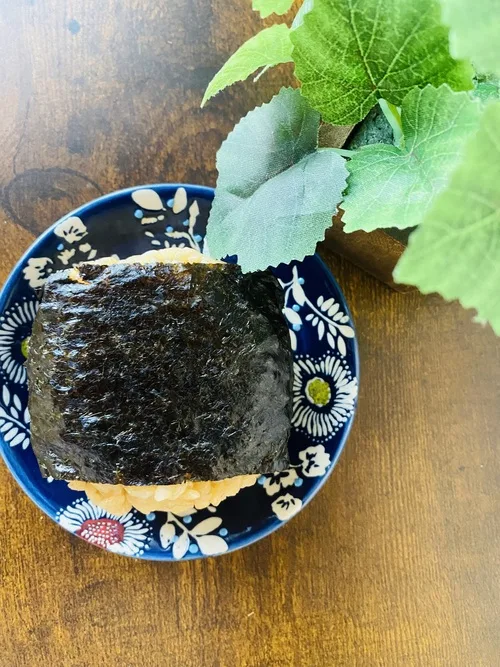
When I first came to Japan, onigiri was one of those foods I noticed everywhere.
At convenience stores, in supermarkets, at train stations, in lunch boxes… little rice balls wrapped neatly in seaweed.
At first, I thought, “It is just rice, right?”
But after living in Japan and becoming a mother, I slowly understood why onigiri is such a comforting life saving food is it! As well Hitesh gets Onigiri as their snack at Hoikuen too (certain days) So he also loves to have onigiri
These days, when my family needs a quick breakfast, a small lunch, or something to take with us when we go out, onigiri is often one of my easiest choices. And I don’t always make the traditional ones. I use my onigiri cutters but I have done this with my clean wet hands too.
I simply look around my kitchen and think, “What do I have today?” That is how some of my favourite family onigiri combinations were born.

1. Tuna & Mayonnaise Onigiri
This is probably one of the easiest ones and very common in almost every Japanese convenience store.
I mix a little canned tuna with mayonnaise and add it to warm Japanese rice.
Sometimes I add a tiny bit of soy sauce or sesame seeds if I have them.
Then I wet my hands with a little water, sprinkle some salt on my palms, and gently shape the rice into a triangle. I have cutters too. For my family, this is one of those “I don’t know what to cook today” meals. It takes only a few minutes.
You need:
- Cooked Japanese rice
- Tuna
- Mayonnaise
- A little soy sauce (optional)
- Sesame seeds (optional)
- Nori
- A little salt
For my toddler, I keep the filling mild and avoid making the rice too salty.

2. Salmon & Sesame Onigiri
Salmon onigiri feels a little more special to me.
I usually cook or grill a piece of salmon, remove the bones and skin carefully, and flake the fish.
Then I mix it with warm rice and a little sesame.
That’s it. Sometimes I wrap the finished onigiri with a piece of nori. I love this one because it feels like a proper little meal rather than just a snack. When I have leftover salmon from dinner, I especially like turning it into onigiri the next day.
You need:
- Cooked rice
- Cooked salmon
- Sesame seeds
- Nori
- A very small amount of salt
It is also a lovely way to use leftovers instead of wasting them.
3. Shirasu & Green Onion Onigiri
Living in Japan has introduced me to ingredients I didn’t grow up eating regularly. Shirasu is one of them.
I remember seeing those tiny white fish in Japanese supermarkets and wondering what I could make with them.
Now they have become quite useful in my kitchen. For a simple onigiri, I mix cooked shirasu with warm rice and finely chopped green onion. Sometimes I add sesame seeds too.
The combination is simple but surprisingly delicious. For my little one, I make sure the shirasu is prepared appropriately and keep the seasoning very light.
You need:
- Cooked rice
- Shirasu
- Finely chopped green onion
- Sesame seeds
- Nori (optional)
4. Egg & Rice Onigiri
This is one of my “we have almost nothing in the fridge” recipes.
I make a simple scrambled egg and let it cool slightly.
Then I mix it into warm rice with a little sesame.
Sometimes I add finely chopped vegetables if I have some leftover from another meal.
Carrot, corn or green onion work nicely.
It is soft, simple and comforting.
And honestly, some days I don’t want complicated food.
I just want something warm that everyone can eat.
5. Leftover Vegetable Onigiri
This is probably the most practical one for a busy mother. I don’t like throwing away small amounts of leftover vegetables.
So if I have a little cooked carrot, pumpkin, spinach or other vegetables left from dinner, I sometimes chop them very finely and mix them into rice. A little sesame oil or sesame seeds can make the flavour more interesting. Then I shape everything into small onigiri. There is something satisfying about turning yesterday’s leftovers into something completely new.
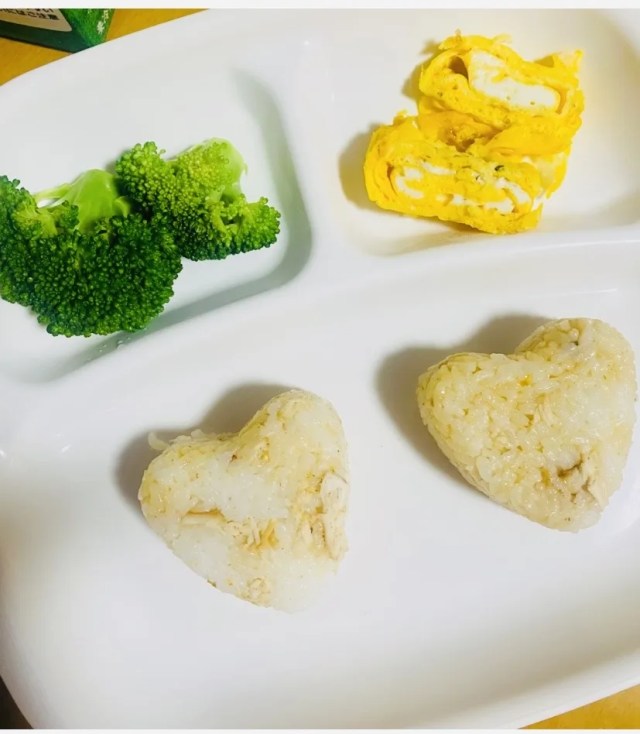
6. Simple Salted Onigiri
And then there are days when I make the simplest onigiri of all. Just rice, a little salt and nori.
That’s it.
No filling.
No special ingredients.
Sometimes simple food is exactly what we need. I especially like making these when we are going somewhere and I know my family might get hungry on the way. I wrap them individually and put them into our bag. A homemade little meal, ready to go.
How I Make Onigiri Without Making a Mess
I used to think shaping onigiri must be difficult. It really isn’t.
I keep a small bowl of water beside me and wet my hands lightly before touching the rice. Then I put some rice in my palm, add the filling in the middle, cover it with a little more rice and gently press it into shape.
Don’t squeeze it too hard.
The rice should hold together, but it shouldn’t become a hard ball. And if your triangle doesn’t look perfect? Don’t worry.
Mine don’t either. Homemade onigiri doesn’t need to look like the perfectly shaped ones in a Japanese convenience store. And I have several types of onigiri cutters when I am in a busy schedule.

My onigiri cutter set
A Little Japanese Food That Became Part of My Family Life
One thing I have learned from living in Japan is that everyday food doesn’t always need to be complicated. Sometimes it is just a bowl of rice, leftover vegetables or an egg. And sometimes, those simple ingredients become a little onigiri that we take with us on an ordinary family day. As a foreign mother living in Japan, I have slowly collected these little everyday food habits.
They weren’t things I planned to learn.
They simply became part of my life here.
And now when I make onigiri for my family, I don’t really think about it as a traditional Japanese recipe anymore.
It feels like our family food. A little bit of Japan, a little bit of my own cooking style, and whatever happens to be waiting in my kitchen that day.
My little onigiri rule
Don’t worry about making it perfect. Use what you have. Keep it simple. Feed your family with love.
That’s usually enough.